
Ridgehouse builds operational instruments.

Each instrument begins as a functional object. It captures signal, interprets context, and performs a defined role. Over time, these tools interconnect and form a larger system. Every release is built for continuity, clarity, and long-term use.

View Products
PERCEPTUAL SYSTEMS

Ridgehouse is an independent systems studio.

We design and build instruments, tools, and environments that operate as complete systems. Studio work extends this practice into collaboration, shaping perception, behavior, and structure across products, platforms, and physical spaces.

Enter the Studio
Function

Systems built in partnership.

Collaborations extend the Ridgehouse methodology into new domains. Together with organizations and individuals, we design and build instruments and platforms that integrate into a larger operational system.

View More Collaborations

Film defines the Ridgehouse world.

Through moving image and narrative structure, Ridgehouse establishes identity, tone, and environment across the system. Film articulates the emotional logic behind the instruments and gives form to the larger mythology.

View Films

Experiment is where the system evolves.

New instruments and frameworks are prototyped here. Concepts are tested, refined, and pressure-checked before entering the broader Ridgehouse architecture. This is the field laboratory.

View Experiments

Subscriptions provide sustained access to the system.

Through subscription, participants receive ongoing signal from Ridgehouse, tools, updates, insights, and structured releases. This is the operational layer that maintains continuity across instruments and platforms.
MEMBERSHIP INCLUDES
More about Subscriptions

Ridgehouse builds working systems from original R&D. We design how products sense, interpret, and act in real-world conditions.

Products. Systems. Experiments. Deployed.

Maps language into structured ideological positions.

Applied: Positioning, contradiction mapping, and decision alignment across complex topics.

Turns symbolic input into structured readings that persist over time.

Applied: Decision-making, theme tracking, and interpretation under ambiguity.

Captures input and transforms it into structured, reusable signal.

Applied: Building capture systems, refactor fragmented information into usable structure across workflows.

Generates structured interpretation across Ridgehouse systems.

Applied: Powering interpretation, memory, and response across tools and workflows.

Explores how live input becomes responsive systems

Applied: Translating live input into structured, hardward, and reactive environments.

Builds environments where systems operate in the real world

Applied: Modeling behavior, context, and decision patterns from fragmented inputs.

@

Narratives that give our instruments a world to operate

We build narrative systems as controlled environments for our products. By changing the environment, we can test how systems behave, reveal new approaches, and develop products with clearer structure and intent. Each instrument operates within one part of a larger system.

All software and hardware is designed and built as part of the system.

The Opinion Machine

Maps complex issues into comparable positions

Use it to: Structure multi-sided issues into clear positions, Evaluate tradeoffs across competing viewpoints, Make decisions with defensible logic

Run the Model

Tarot 1887

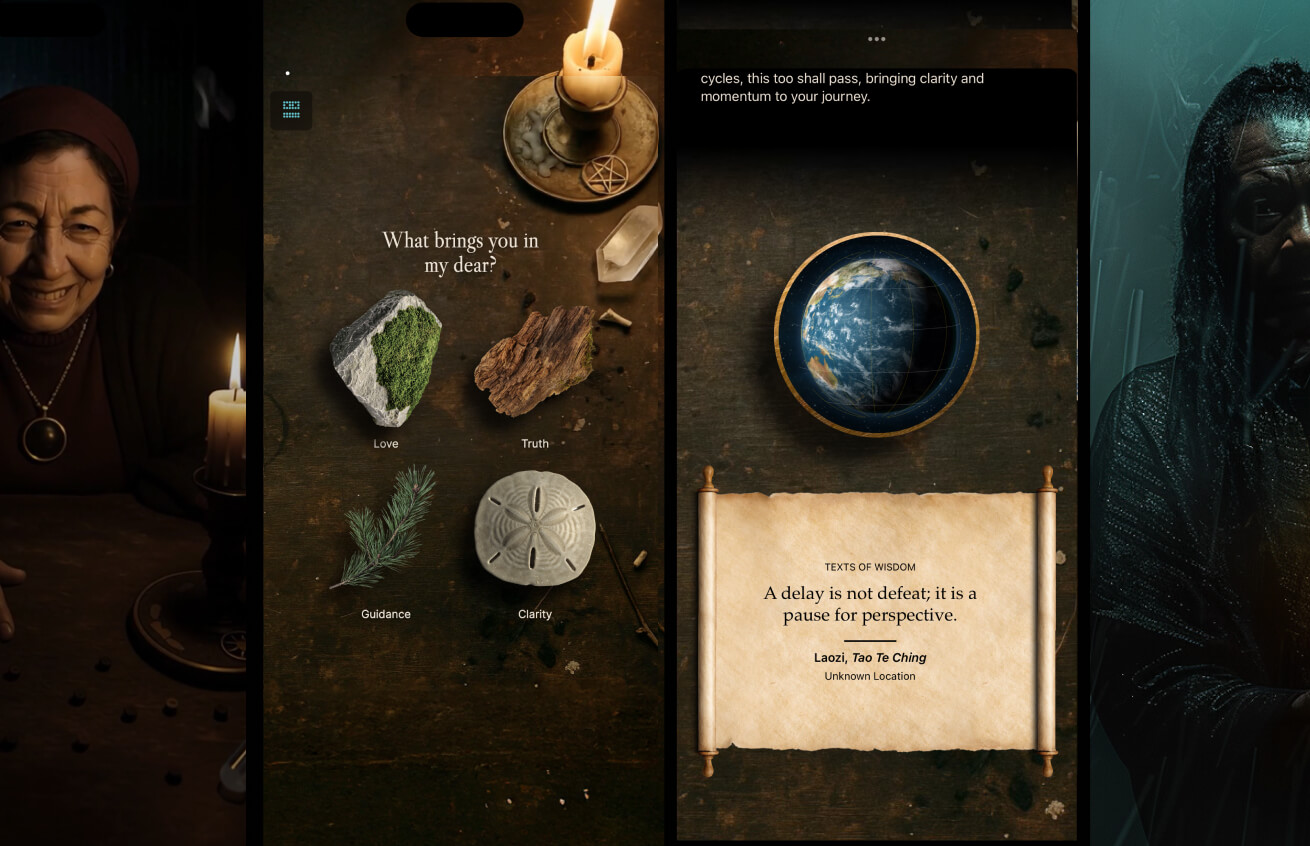
Turns symbolic input into structured narrative output.

Useful for: Exploring scenarios, Maintaining themes throughout experience, Memory based system that continues to build experience

Explore the System

Relay

Turns symbolic input into structured narrative output.

Use it to: Collect signal across tools, feeds, and sources. Structure notes, links, and ideas into one place, and Build a working knowledge system you can act on

Use Relay

Atlas Part 1

Maps relationships across data, narrative, and structure.

Coming soon.

Use it to: Connect separate systems into a unified model, Visualize how information relates and evolves, Build a foundation for more complex products

Products are where the system becomes real

We take what exists and shape it into a product that runs, connects, and holds together over time

Products only work when everything holds together across interaction, logic, and infrastructure.

If the product needs to operate as one and move with speed, we define, design, and build it.

We take what is already in motion and give it structure.

Ideas, features, and systems are aligned into a single product that can function as a whole.

  • Consistent structure across product, brand, and behavior
  • Integrated payments, subscriptions, and APIs
  • Deployed across web, mobile, and platform environments
  • Built to evolve without losing coherence
  • Product logic and interaction model
  • Payment and subscription systems
  • API and data infrastructure
  • Platform integration across environments
  • Growth, retention, and lifecycle design

The product is built to stay intact under change. As features are added and the system grows, the structure remains clear.

Decisions build on each other instead of creating friction.

A product that can move forward without losing direction.

Teams align around one system.
The product can expand, adapt, and continue to operate cleanly over time.